
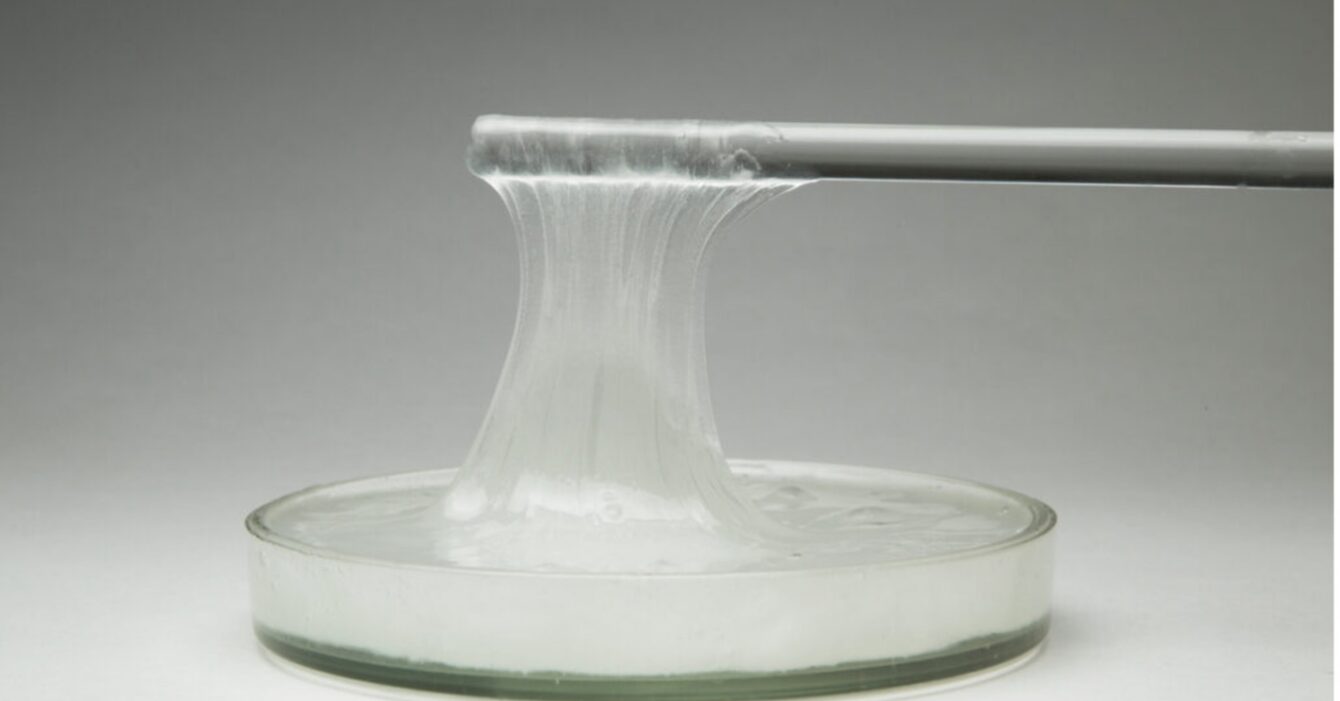
When we talk about polyureas and polyurethanes, we tend to focus on the end result: a watertight roof, a hard-wearing floor or a protected tank. However, for these polyurea and polyurethane systems to reach that optimal performance, the material must make a critical journey: changing from liquid to solid right in the middle of the job.
At Krypton Chemical, we leave nothing about the behaviour of our polyureas and polyurethanes to chance. The reason why a resin sprays without clogging, or why a polyurea doesn’t sag on a vertical wall, lies in a fascinating discipline: rheology.
What is rheology and why should you care?
Rheology is the science that studies how materials flow and deform when a force is applied to them. In our sector, it is the difference between a product that goes on “like silk” and one that causes problems in the machinery.
To understand it, we need to work with two fundamental concepts:
- Viscosity: this is the “resistance” to flow. Not all resins flow the same way; some are designed to be more fluid and others more structured.
- Elasticity: this is the material’s ability to recover its original shape after being deformed — something essential in polyureas and polyurethanes subjected to continuous stress.
Most of our systems are viscoelastic: they combine both properties. They behave one way under the pressure of a spray machine and very differently once applied to the substrate.
The secret of non-Newtonian fluids
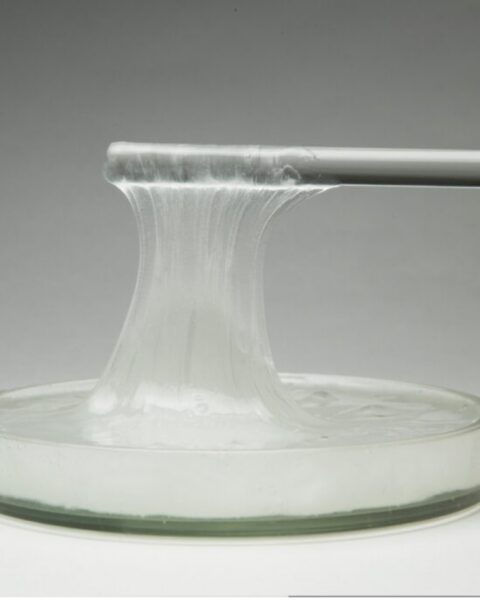
Unlike water (which keeps its fluidity regardless of pressure), Krypton’s polyurea and polyurethane systems are non-Newtonian fluids. Their viscosity changes according to the applied stress.
- During application: as they pass through a spray gun nozzle or are spread with a roller, these resins reduce their viscosity, allowing them to flow correctly.
- After application (thixotropy): this is where the magic happens. Thanks to thixotropy, the resins quickly recover their structure once applied. This allows a polyurea to be applied on a vertical wall without the product running down to the floor.
From liquid to solid: guaranteed performance
Rheological study doesn’t end when the applicator puts the tool away. Once cured, the resin becomes a viscoelastic solid with advanced mechanical properties.
At Krypton Chemical, we analyse how this solid behaves over time:
- How will they respond to thermal expansion?
- How will these resins respond to continuous loads (creep)?
- Will they keep their ability to recover after an impact?
Understanding rheology allows us to formulate and develop products that are not only resistant, but also applicator-friendly. We optimise every formulation so that on-site control is total and the final result exceeds mechanical expectations.
In short, rheology is the tool that allows us to transform the behaviour of the different polyureas and polyurethanes into reliable solutions for waterproofing, flooring and industrial coatings.
Do you have a project with complex technical requirements or demanding vertical surfaces?
Contact our technical team and we will help you design the perfect solution for your project.